Our story
Seventeen years, one yard, one argument
RePallet Co. has made the same case since 2009: a wooden pallet should be repaired, re-sold or re-made before anyone considers destroying it. Everything in this yard exists to make that argument commercially, not just morally.
Request pricing
Everything marked with a star is required. The rest helps us quote faster.
RePallet Co. was founded in 2009 and has operated from 4890 Geneva St, Denver, CO 80238 since 2013. It buys, sells, repairs, recycles and hauls used wooden pallets across Denver and the Front Range, and sends nothing from its wood stream to landfill.
Thirty-one people, four acres, one flatbed that started it and is still parked behind the crating shop.
Timeline
How it actually went
Not a founder myth. A sequence of fairly ordinary operational decisions, most of which were made because something had gone wrong.
- 2009
One flatbed, half an acre
Darnell Pryce leased a half-acre off Smith Road with a 2001 flatbed and a hand-written price list. The first month moved 640 pallets and lost money on 200 of them.
- 2011
The first repair bench
A single station, one person, and the discovery that repairing a pallet was worth roughly five times more than selling it as a core. Everything since has been an argument for doing more of that.
- 2013
Move to 4890 Geneva St
Four acres in the Central Park industrial pocket, with hard standing, a gate a 53' trailer could actually turn in, and room to sort rather than stack.
- 2014
The $1,842 invoice
A month's landfill tipping fee for wood we had been paid to collect. The yard stopped using the phrase 'waste wood' and started building the recovery lines that removed it.
- 2016
Grinder, magnet, mulch
The fibre line opened — not as a business but as an end point, so that nothing leaving the yard would need a landfill. It has run close to break-even ever since, which is the correct outcome.
- 2017
Pallet RPC-17-0044
A stencil on a centre stringer, to settle an argument about how many lives a pallet really gets. Seven, as it turned out. The notebook became the Pallet Passport.
- 2019
Four-station repair line
Ben Ihejirika rebuilt repair into board replacement, companion stringers, plugging and de-nailing. Throughput roughly tripled and the fibre percentage fell from 7% to 4%.
- 2021
The lumber spike
New pallet prices doubled and lead times hit eleven weeks. We allocated stock to customers we already had, which was uncomfortable and correct, and it is why our oldest accounts are still our largest.
- 2022
Route pairing
Tova Lindqvist rebuilt Front Range routing around the fact that most customers both receive and generate pallets. Empty miles fell from 46% to 29% over three years.
- 2023
Published carbon methodology
Inés Vargas published the full factor list, including the five legitimate-looking choices that would have quadrupled our headline figure and which we did not take.
- 2024
Zero landfill, audited
The first year with an independent verification of the zero-landfill claim across the whole wood stream. 186,000 cores, nothing buried.
- 2026
Still one yard
We have been asked several times to open a second site. We have not, because route pairing only works with density and a second yard would halve it. One yard, done properly, is the strategy.
What we believe, testably
Four claims you can check
Repair beats recycling
Our fibre percentage has fallen from 9% to 3% since 2014. Ask any recycler what theirs is doing.
Grades are written down
Attached to every order acknowledgement. Swap or credit within two business days if a load misses it.
Numbers are published
Including the accounting choices we declined to make, and the assumption we are least confident about.
We say no
To pooled pallets, to MB-stamped wood, to racking Grade B, and to reclaimed lumber in regulated supply chains.
Read the working
Working in public
We publish the parts that are awkward
Most of what a pallet yard does is invisible to its customers, which makes it easy to claim anything. Our response has been to publish the operating detail — repair costs, margins, grading accuracy, carbon methodology and the arguments we lost.
It is not transparency for its own sake. It is the only way we know to make a claim that can be checked, in an industry where most claims cannot be.
Read the journalAbout the company
Who owns RePallet Co.?
It is independently owned and has been since 2009. No private equity, no roll-up, no parent company with a different opinion about what to do with a repairable pallet.
How big is the yard?
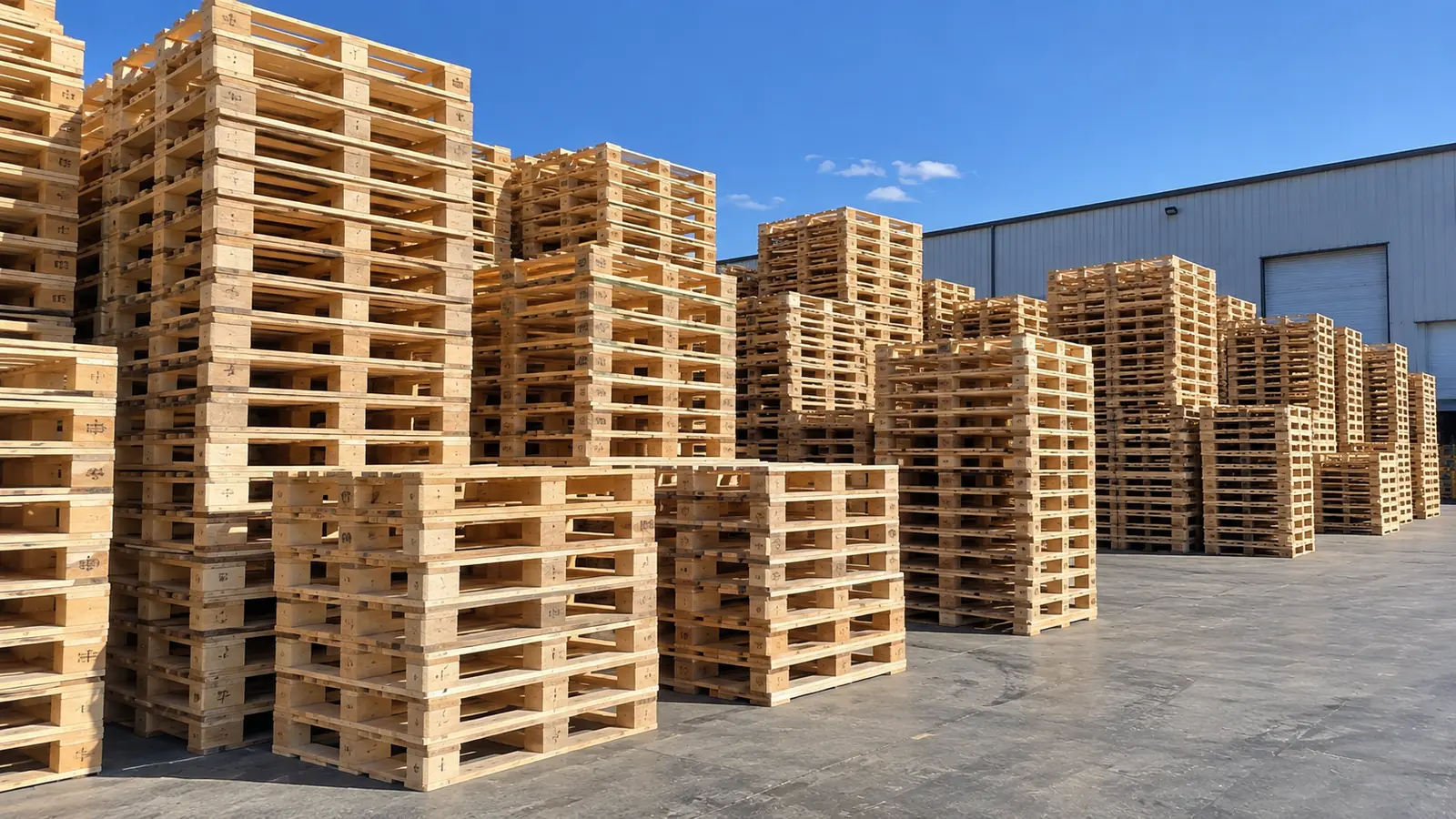
Four acres at 4890 Geneva St, with covered sort and repair bays, a fibre line, a crating shop and hard standing for around forty trailers. Roughly 186,000 cores pass through it a year.
Why only one location?
Because route pairing — running a delivery and a collection on the same trip — only works with geographic density. A second yard would halve the pairing rate at both sites. We would rather serve the Front Range properly than serve four states badly.
How many people work there?
Thirty-one, including drivers. Grading is the best-paid non-management role, which is deliberate: it is the only job where one person's accuracy moves a six-figure number.
The numbers behind seventeen years
| 2009 | 2016 | Last full year | |
|---|---|---|---|
| People | 2 | 14 | 31 |
| Site | 0.5 acres, leased | 4 acres | 4 acres |
| Cores processed | ≈ 7,600 | 94,000 | 186,000 |
| Trailers | 1 | 4 | 9 |
| Landfill rate | Unmeasured | 9% | 0% |
| Fibre share of intake | — | 7% | 3% |
| Repair share of intake | 8% | 22% | 31% |
| Empty miles | Unmeasured | 46% | 29% |
| Customers served | 11 | 240 | 610 |
| Grader turnover | — | 22% | <8% |
Things we got wrong
A company history that is all good decisions is a marketing document. These are the four that cost us most.
- Buying the grinder before the offtake agreement (2015). Eighteen months of running a fibre line at a loss while we learned who would buy screened mulch. We now sign the buyer before the machine.
- Measuring grading by speed (2016 – 2018). We tracked units per hour and accuracy drifted. Switching the metric to spot-checked accuracy was worth more than any equipment we have bought.
- Over-promising on the southern route (2019). We quoted Colorado Springs like a metro lane for a year and missed windows we should never have offered. Consolidated scheduling fixed it and the honest answer arrived a year late.
- Stockpiling in late 2021. We built inventory against a spike that was already peaking, then watched it weather through a winter. Two hundred units were written down. The lesson is on the journal.
There is a fifth we are still arguing about internally: whether to build covered storage or a second sort line first. Covered storage is the real constraint and the sort line is the more interesting project, which is exactly why the argument keeps going.
How we think about growth
We have been asked several times to open a second yard, and twice to sell. Both answers have been no, for reasons worth stating plainly since they affect how we serve you.
- Route pairing needs density. A second site would halve the pairing rate at both, which would make us worse at the geography we already serve and raise everybody's freight.
- Grading is the constraint, not capacity. Our limit is skilled graders, and you cannot hire your way out of a four-month training curve by opening a building.
- Repair-led economics do not scale by volume alone. A bigger grinder is easy; a bigger repair line needs people who make 800 accurate judgements a shift.
- Independence keeps the incentives honest. An owner with a quarterly grinding target would grind, whatever the website said.
- We would rather serve 610 customers well than 2,000 adequately from four sites.
Growth here means recirculation rate, not revenue: more of what arrives going back out as a pallet rather than as fibre. That number has moved from 30% to 89% in a decade, and it is the one we manage the business against.
Let's keep your pallets in the loop
Whether you have 40 broken cores behind the dock or need 4,000 Grade A pallets a month, the conversation starts the same way.