Denver · 4890 Geneva St
The pallet under your freight has already lived four lives.
RePallet Co. buys, repairs, sells, recycles and hauls used wooden pallets across Colorado. Nothing we take in gets buried — every core leaves the yard as a pallet, a board, a bale or a bag of mulch. That is not a marketing line; it is the business model.
Request pricing
Everything marked with a star is required. The rest helps us quote faster.
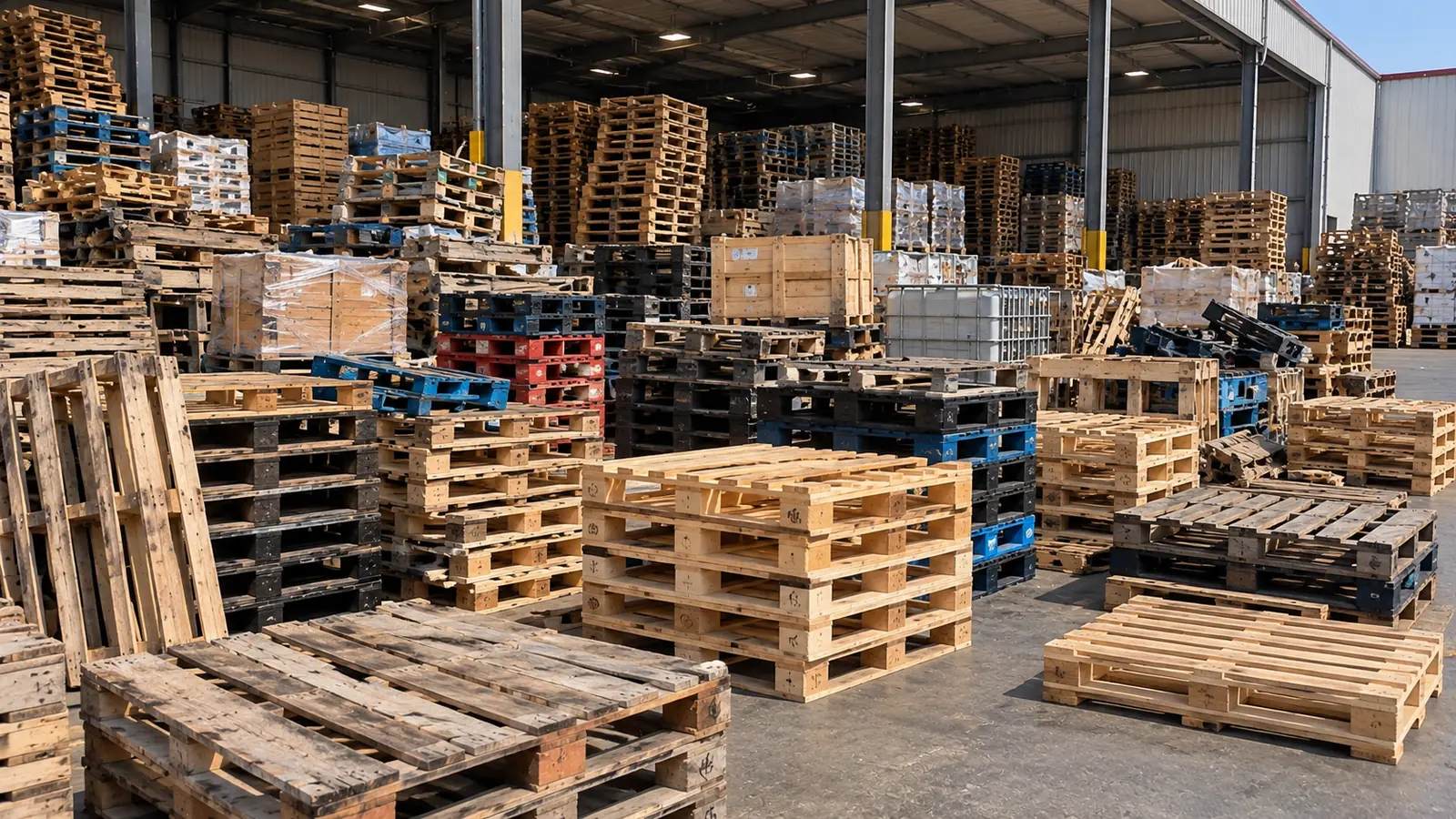
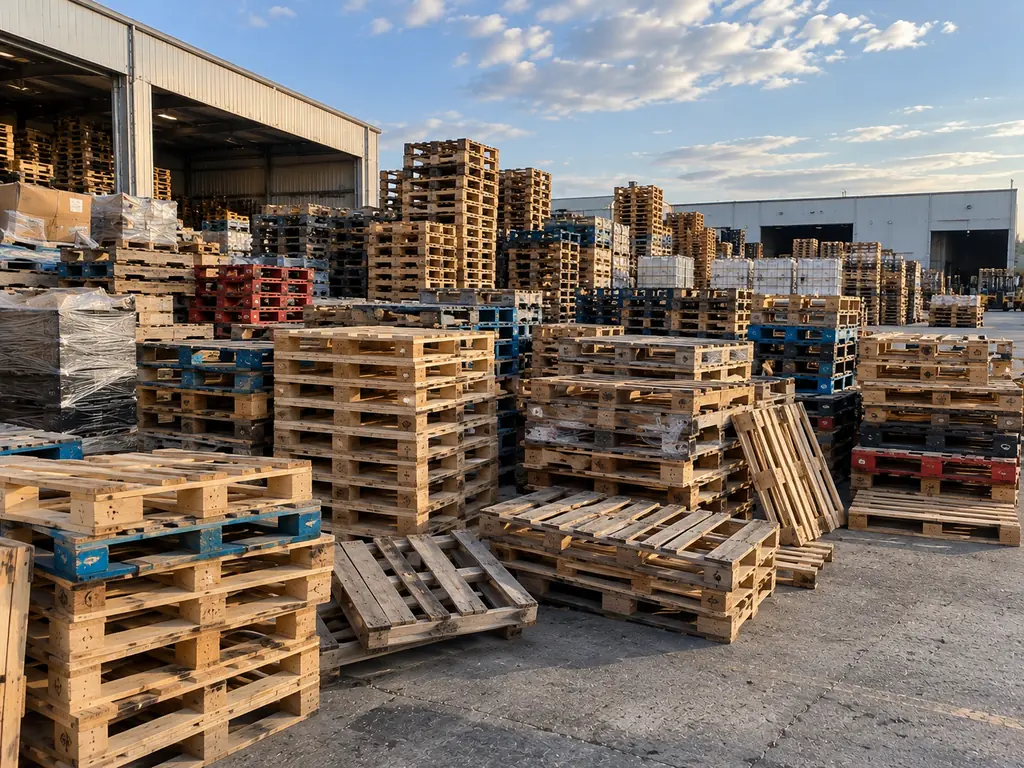
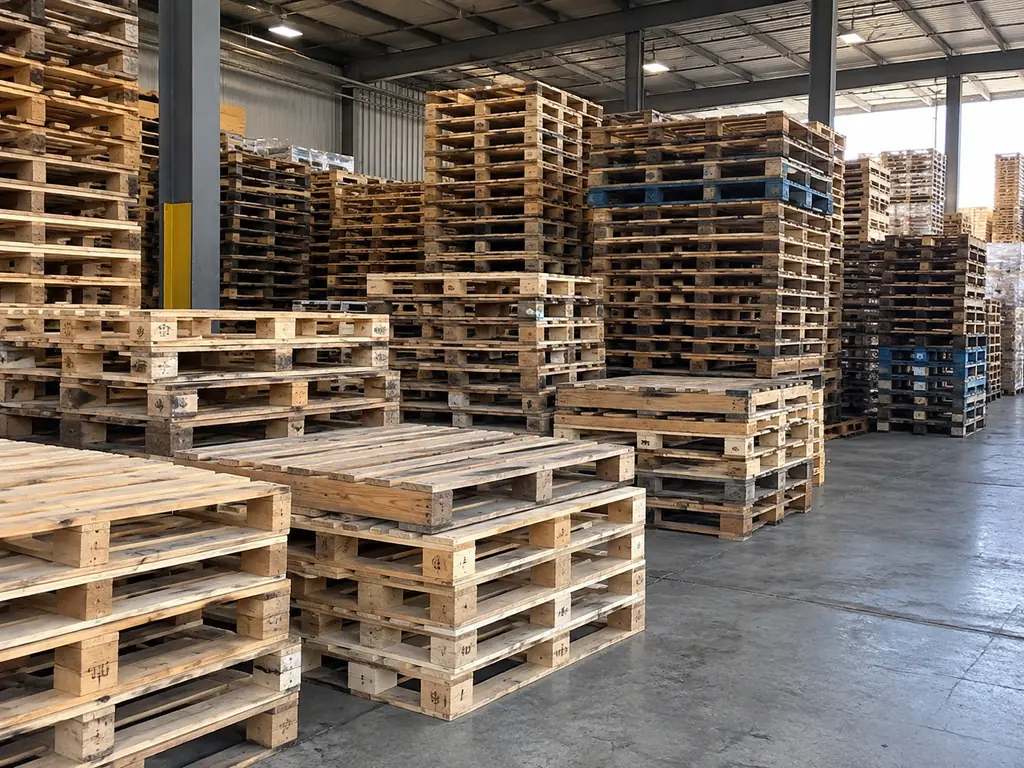
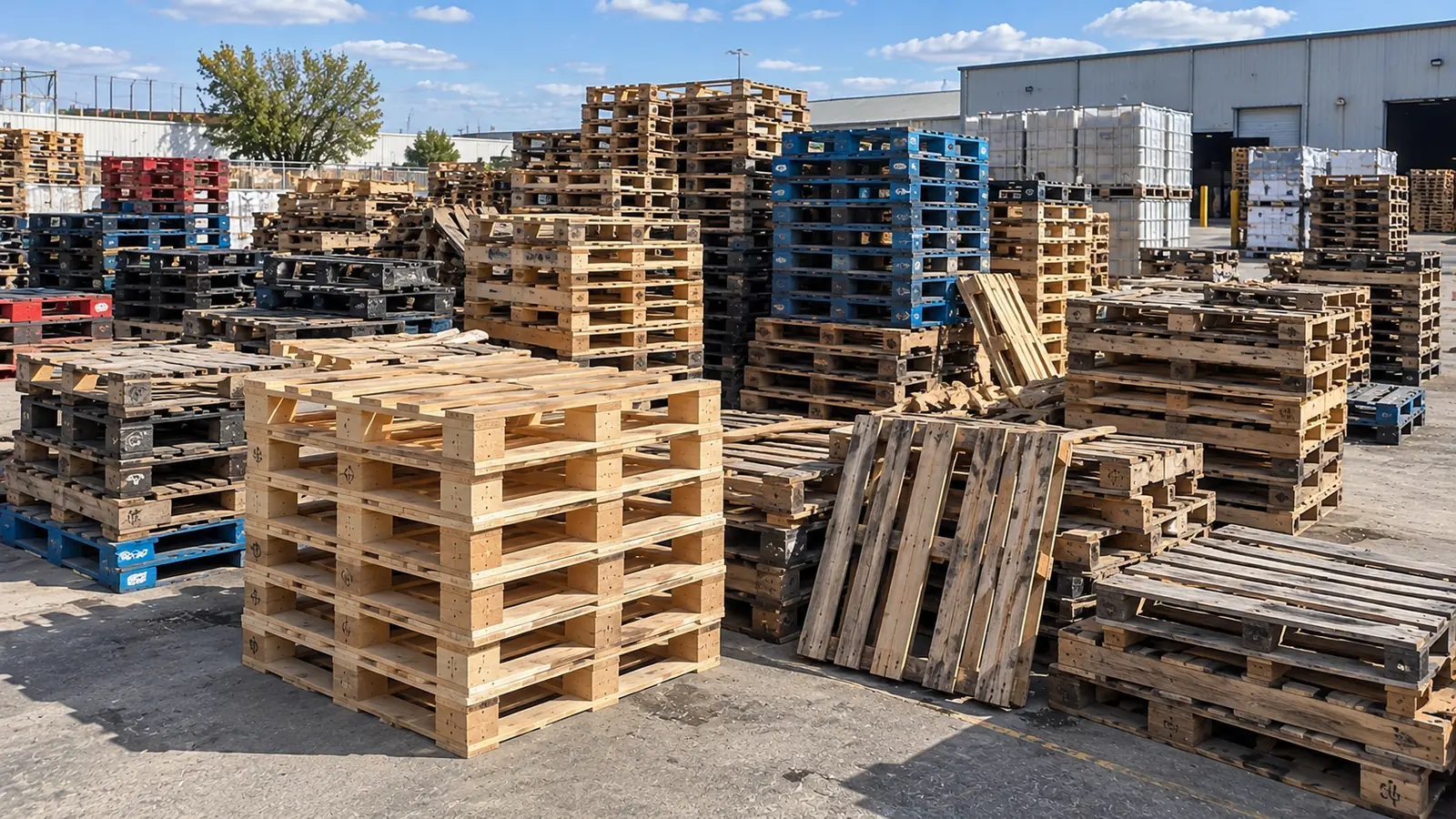
Four acres in north-east Denver
This is the yard. There is only one.
No brokered loads we have never seen, no subcontracted grading, no mystery about where your pallets went. Everything on this site passes through these gates.
Why a yard, not a broker
We touch every pallet we sell you
Brokers move paper. We move wood. Everything on this site passes through one four-acre yard in Denver, which is why we can tell you what grade a load actually is — and prove where it came from.
Zero-landfill promise
Every core that enters 4890 Geneva St leaves as a pallet, a board, a bale or mulch. Nothing goes to the tip — we publish the tonnage.
Reuse before recycling
Repair beats recycling by an order of magnitude. We grade for repair first and only break a pallet down when the wood has no life left.
Our own trailers
Flatbeds, curtain-sides and drop trailers run the Front Range daily, so pickups are scheduled in days, not weeks.
Graded, not guessed
Published, photographed grade standards. If a load misses the spec you agreed to, we swap it or credit it. No debate.
The ReLoop Ledger
Move the slider. Watch a landfill not happen.
Every pallet kept in circulation is lumber that never gets cut, a truck that never hauls waste and a line item that never hits your budget. Here is what your own volume looks like — the factors behind it are published in full.
That is 3,000 pallets over 12 months — the equivalent of taking 3.1 cars off Colorado roads for a year.
Services
The full circular menu
Nine services, one yard, one email thread. Most customers start with one and end up on three.
Buy used pallets
Graded 48x40 GMA, Euro, block and odd sizes. Pulled, banded and loaded the same week.
Read moreSell us your pallets
We pay per core, bring the trailer and clear the dock. Standing programmes available.
Read morePallet recycling
Zero-landfill dismantling. Boards, nails and fibre all find a second buyer.
Read moreRepair & refurbishment
A four-station repair line that turns a broken core back into a Grade A pallet.
Read moreRemoval & pickup
Scheduled routes, on-call clear-outs and full warehouse decommissions.
Read moreHeat treating & ISPM 15
Export-compliant timber, stamped and certified for international freight.
Read morePallet Passport
Every batch we ship has a paper trail
Stencil an ID on a pallet and it stops being anonymous. Each batch that comes through the yard gets an RPC- number that records where it came from, what we did to it, how many boards we replaced, how much lumber we recovered and where it went next.
Customers use it for their own sustainability reporting. Auditors like it because it is a record, not an estimate. We like it because it keeps us honest.
Trace a batch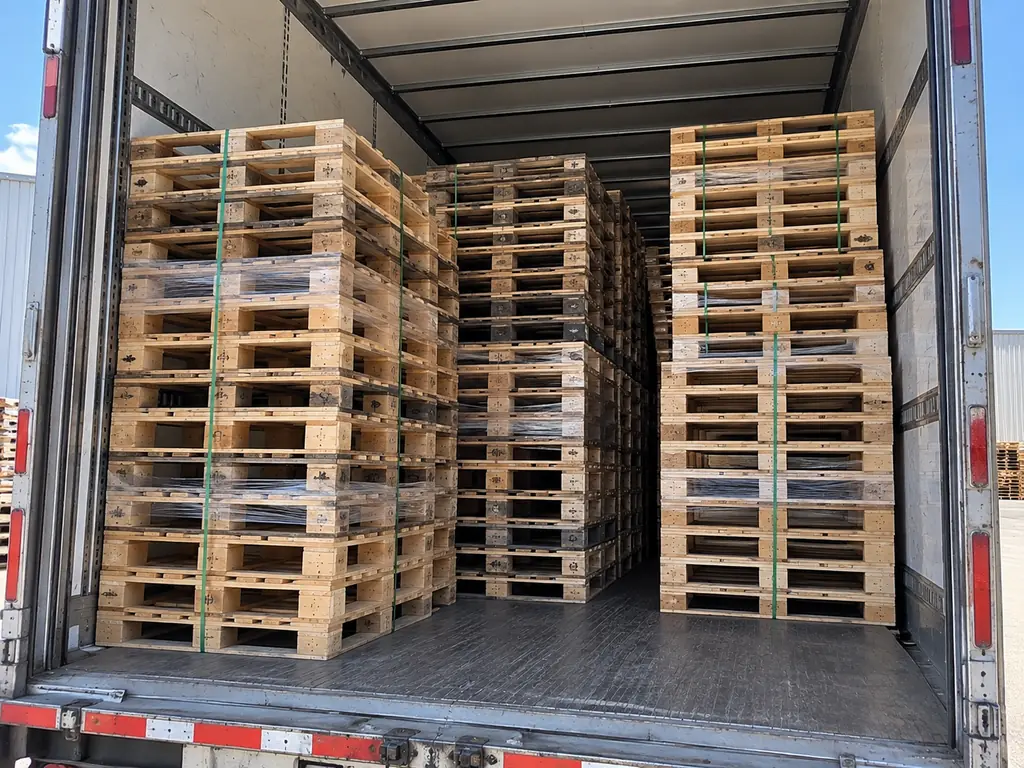
640 × 48" x 40" GMA · Grade A
- Sourced: grocery DC, Commerce City CO
- 142 deck boards replaced with reclaimed stock
- 388 board feet of lumber recovered
- 3,072 kg CO₂e avoided · 10.4 t diverted
- Dispatched to a Front Range beverage packer
Life cycle #4 of an expected 7.
Pallet size library
Fifteen footprints with dimensions in inches and millimetres, load ratings, entry types and the industries that actually use them — plus a searchable matcher so you can find the one on your dock without a tape measure.
Open the size chartSizes & specs
Knowing the footprint is half the quote
Nine out of ten pricing mistakes start with the wrong size. A 48" x 40" with stringers on the 48" side is a completely different pallet on a conveyor than the same lumber rotated. Our library spells out what changes and why it matters.
How it works
Five steps from your dock to its next life
- 1
You send the details
Footprint, rough count, dock hours. Photos help but are not required.
- 2
We price and schedule
A yard manager replies within a business day with a per-unit number and a collection window.
- 3
Our trailer arrives
Flatbed, curtain-side or a drop trailer you fill at your own pace.
- 4
Grade, repair, rebuild
Each core is inspected, sorted and either repaired to grade or broken down for lumber.
- 5
Back into circulation
Re-sold, re-made or ground to mulch — and logged on a Pallet Passport.
Who buys from us
Food, beer, freight and everything heavy
Colorado runs on distribution. Grocery DCs in Commerce City, breweries from Longmont to Durango, cannabis cultivators, cold-chain packers, machine shops, building-products yards and the 3PLs that serve all of them. Different footprints, same problem: pallets arrive faster than they leave.
See industry programmes- 01
Food & beverage
Hygiene-screened Grade A stock and rapid core buyback.
- 02
Breweries & distilleries
36" keg squares, half pallets and taproom display units.
- 03
3PL & warehousing
Managed on-site supply with weekly reconciliation.
- 04
Manufacturing & export
Custom skids, crating and ISPM 15 stamped timber.
Straight answers
Do you buy used pallets, and what do you pay?
Yes — buying cores is half of what the yard does. Pricing depends on footprint, grade, quantity and how far we have to drive. As a working range in the Denver metro, sound 48" x 40" GMA cores typically sit between $3.50 and $8.50 each, Euro pallets higher, and odd sizes lower. Volumes above roughly 400 units usually earn free collection.
How fast can you collect pallets from my dock?
Inside the Denver metro we normally schedule within two to four business days, and we keep a same-week slot open for customers on a standing programme. Along the rest of the Front Range — Colorado Springs, Fort Collins, Greeley, Pueblo — we run consolidated routes, so collection is usually within a week.
What actually happens to a pallet you can't repair?
It never leaves as waste. The unit is dismantled, usable deck boards and runners are pulled for reuse, nails are magnet-separated and sold to a scrap smelter, and what is left is ground into landscape and playground mulch. That is the whole reason we publish a Pallet Passport for every batch.
Can you supply heat-treated pallets for export?
We do. Our heat-treatment partner runs to the ISPM 15 schedule (core temperature of 56 °C held for 30 minutes) and every compliant unit carries the IPPC wheat stamp with our registration number. See heat treating & ISPM 15.
Do you sell anything other than pallets?
Plenty. Pallet collars, top caps and lids, corner board, bulk bins, custom crates, reclaimed boards and runners, colored landscape mulch, and a small line of upcycled furniture and retail displays built in the yard from batches that were too far gone to repair.
Is there a phone number?
No — deliberately. We are an email-first yard, which means your request lands in a shared queue that a real manager works through rather than a voicemail box nobody checks. Email hello@repalletco.com or use any form on this site and you will have a reply within one business day.
Start in the knowledge yard
What a pallet actually costs you, end to end
Most companies know the unit price of a pallet and almost none know the total. The gap between the two is where the money is, and it is rarely where people look.
| Line | Ad-hoc buying | Right-sized grades | Managed programme |
|---|---|---|---|
| Pallet purchase | $43,500 | $34,800 | $27,650 |
| Freight | $9,200 | $9,200 | $5,900 |
| Rush orders | $3,400 | $3,400 | $0 |
| Disposal or skip costs | $6,900 | $6,900 | $0 |
| Core revenue recovered | $0 | −$2,100 | −$7,400 |
| Admin (invoices, chasing) | $2,600 | $2,600 | $400 |
| Net annual cost | $65,600 | $54,800 | $26,550 |
The right-hand column is not a discount. It is the same pallets, bought and returned through one relationship instead of six transactions, with the grade matched to the destination and the freight paired in both directions.
Denver, the Front Range, and why geography decides everything
Pallets are bulky, light and low-value per unit, which makes them unusually sensitive to distance. A pallet is worth roughly ten dollars and costs roughly two dollars a hundred miles to move. That single ratio explains almost everything about how this industry is structured.
Why local beats national
A broker sourcing from three states away is paying freight on a low-value item. We can undercut that on price and beat it on lead time simply by being twelve minutes from Commerce City.
Why we pair every run
A trailer that delivers and returns empty has burned half its miles for nothing. 71% of our runs now carry freight in both directions, up from 22% in 2019.
Why we will not open a second yard
Route pairing needs density. A second site would halve the pairing rate at both, which would make us worse at the geography we already serve.
Why core supply is tight here
Warehouse construction has added pallets to circulation faster than the return stream has grown, and several regional recyclers consolidated. Cores are the binding constraint on this market.
If you are on the Front Range, that geography is working for you. If you are further out, we will tell you honestly whether the freight makes sense — and sometimes the answer is no.
Twelve questions we get almost every week
| Question | Short answer |
|---|---|
| What does a used pallet cost? | $8.50 – $13.50 Grade A, $5.50 – $9.00 Grade B in Denver |
| What will you pay for mine? | $5.00 – $8.50 for sound 48x40 cores |
| Is collection free? | Above roughly 400 units in the metro, yes |
| How fast can you collect? | 2 – 4 business days in the metro |
| What is the standard pallet size? | 48" x 40" in North America; 1200 x 800 mm in Europe |
| How much weight can it hold? | ≈4,600 lb static, 2,800 lb dynamic, 1,500 – 2,500 lb racked |
| What is the difference between A and B? | Repair history and consistency, not raw strength |
| Do you buy broken pallets? | Yes — they are repair-line and lumber stock |
| Do you take CHEP pallets? | No. They belong to the pool; we return them free |
| Do I need heat treatment? | Only for international shipments, not domestic |
| What happens to unusable pallets? | Dismantled for lumber, steel and fibre. Nothing is landfilled |
| Why is there no phone number? | A pallet quote does not survive a voicemail |
There are thirty more on the FAQ page, eighty-plus terms in the glossary, and long-form answers to most of them across the knowledge yard and the journal.
Let's keep your pallets in the loop
Whether you have 40 broken cores behind the dock or need 4,000 Grade A pallets a month, the conversation starts the same way.