Company · The yard
Four acres, seven stations, one gate
If you have ever wondered what a pallet recycling yard actually contains, this is ours, in the order a pallet passes through it.
Request pricing
Everything marked with a star is required. The rest helps us quote faster.
RePallet Co. operates a four-acre yard at 4890 Geneva St in north-east Denver, with a weighbridge, covered sort and repair bays, a fibre recovery line, a crating shop and hard standing for around forty trailers.
Around 186,000 pallets pass through it a year. Visitors are welcome during weekday yard hours — most of what happens here is more interesting than the website makes it sound.
The route a pallet takes
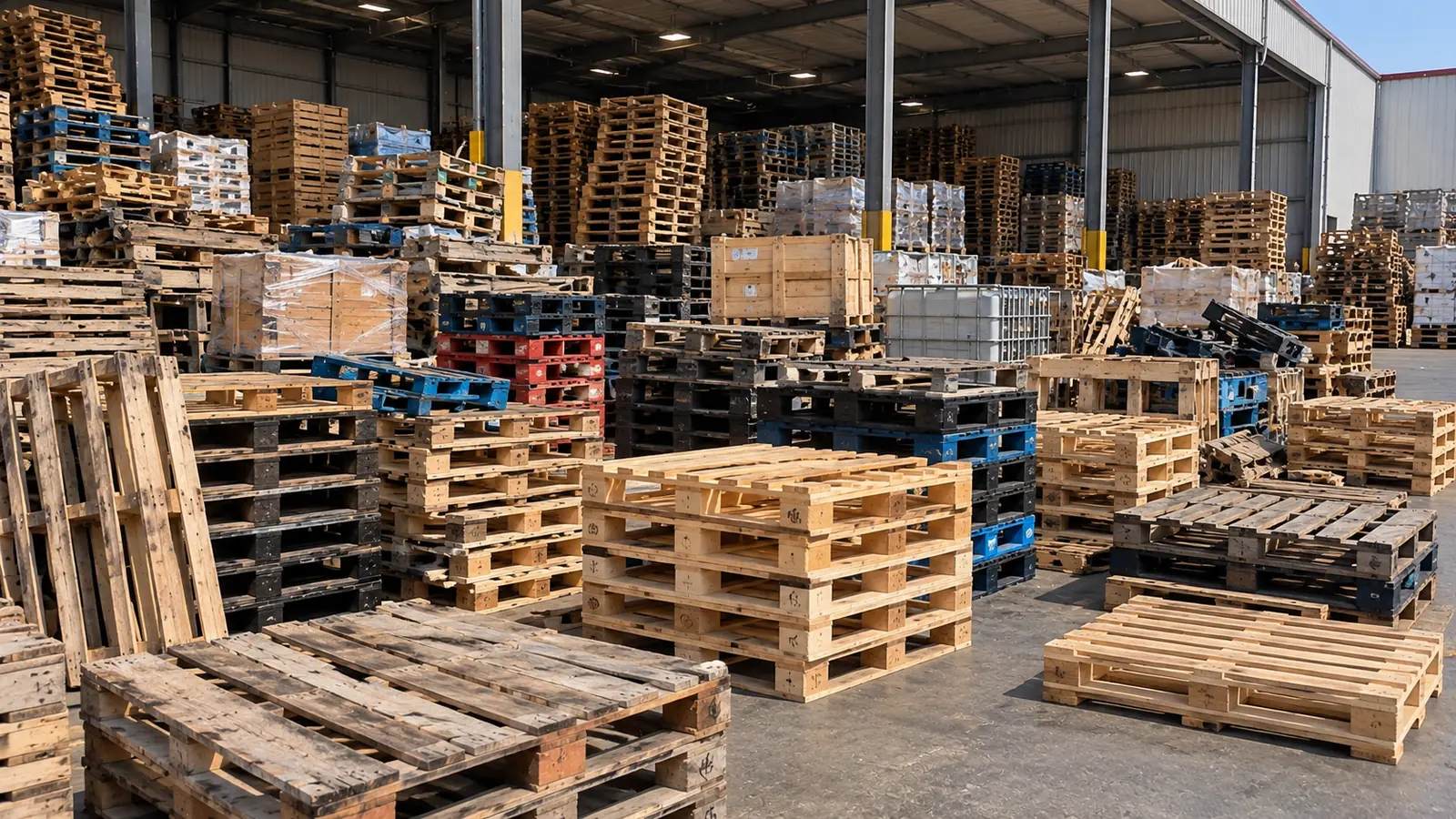
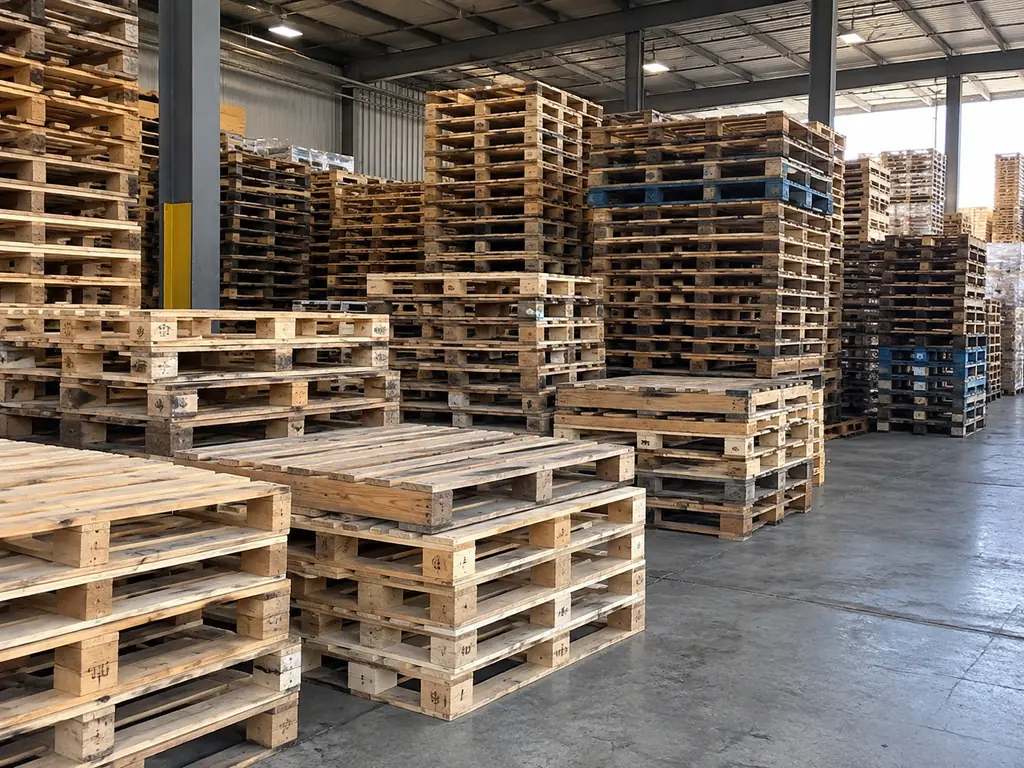
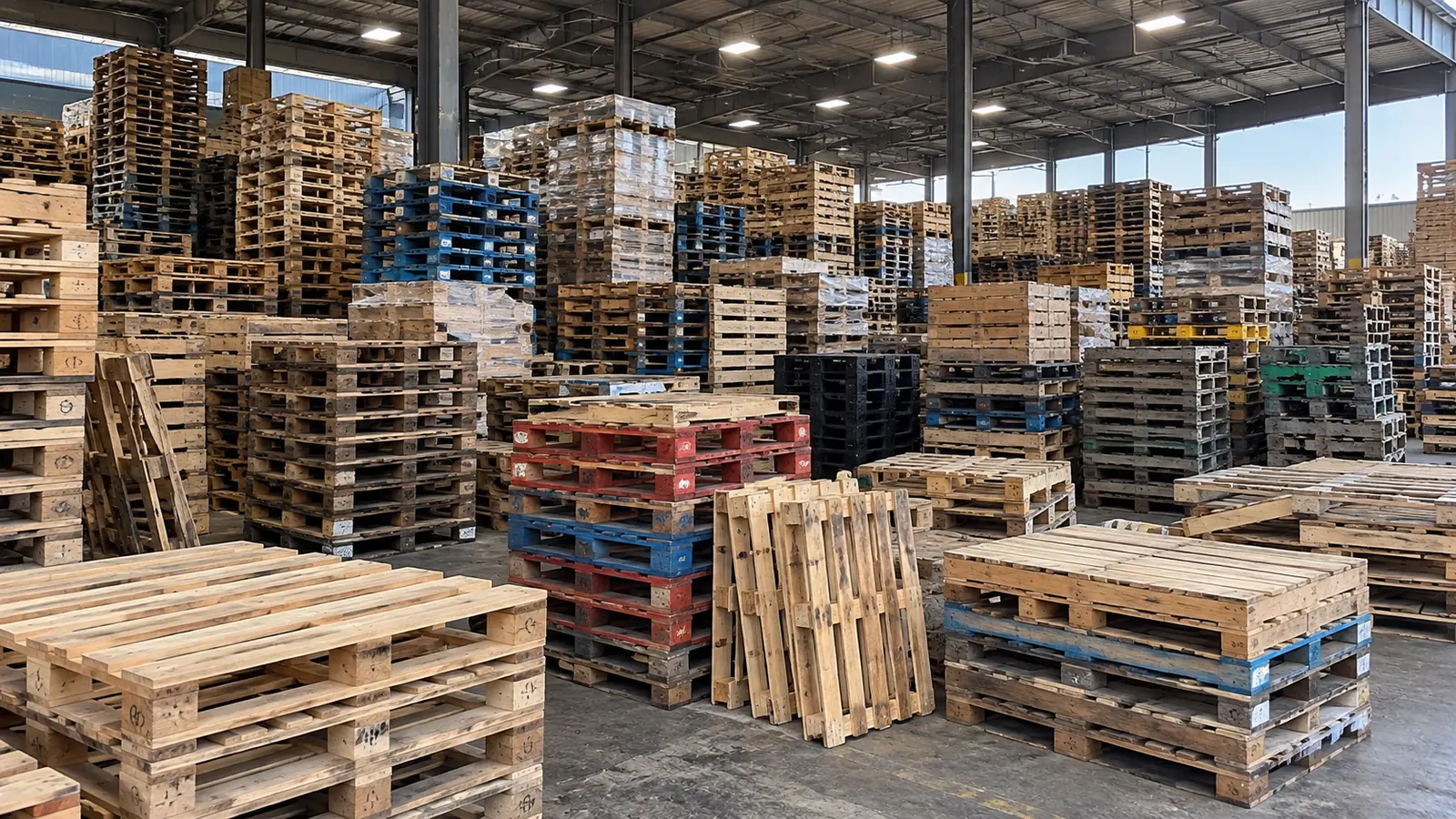
- 1
The gate and weighbridge
Everything crosses the scale. The load is photographed, a batch reference is opened, and every subsequent record ties to that number.
- 2
Staging apron
Hard standing for about forty trailers, with a turning circle a 53' unit can use without reversing onto Geneva Street.
- 3
Sort line
The four-second decision, under cover. One grader, four outfeed lanes: reuse, repair, remanufacture, dismantle.
- 4
Repair bays
Four stations — board replacement, companion stringers, plugging, de-nailing — plus a re-squaring jig.
- 5
Remanufacture saws
Where a broken 48x40 becomes two half pallets, a quarter or a skid.
- 6
Fibre line
Pre-grind magnet, hammer mill, post-grind magnet, two screens and a colour tumbler.
- 7
Crating shop
At the back, where custom skids, export crates and the upcycled range get built.
The bits visitors always ask about
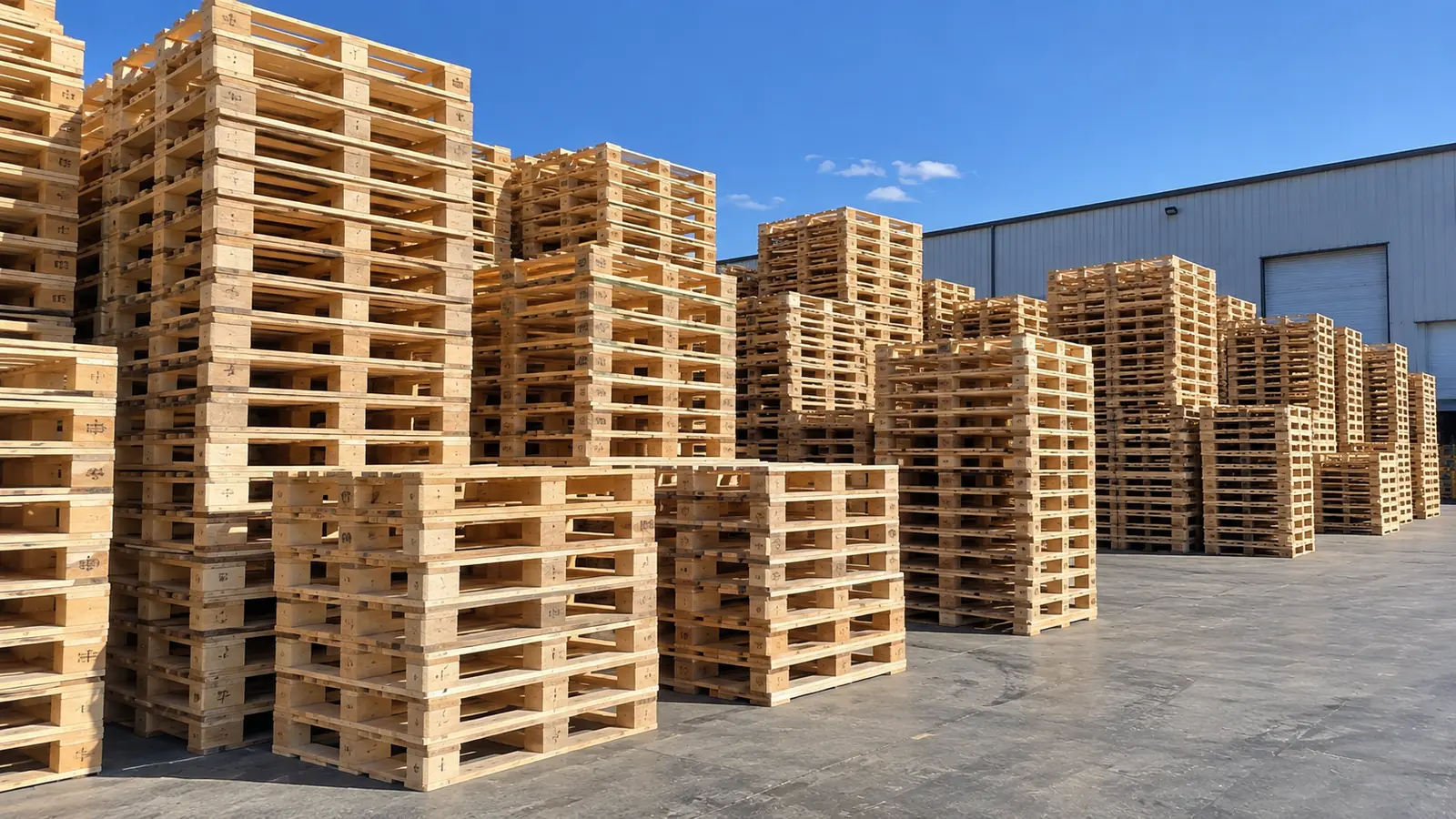
The thaw bay
November to March, frozen loads spend 24 to 48 hours under cover before they reach the sort line. It is the single cheapest thing we do for a seller's price, because a grader who cannot see the wood grades conservatively.
The rejection pile
Every honest yard has one and will show it to you: mould-bloomed units, chemically stained pallets, MB-stamped wood. It goes to licensed disposal at our cost, and it is the one wood stream we do not recover. We count it and publish it.
The want-list board
A whiteboard by the gate listing footprints customers have asked for that we do not currently hold. Every unusual pallet entering the yard gets checked against it before it reaches the sort line. It works far more often than it should.
The first flatbed
A 2001 flatbed parked behind the crating shop. It moved the first 640 pallets in 2009 and it has not turned a wheel since 2015. It is not a monument; there has just never been a good reason to sell it.
Visiting
- Weekday yard hours for collections, purchases under about forty units, and site visits.
- Saturday mornings for drop-offs only, 7:00 AM to 12:00 PM.
- Larger purchases: send a request first so the load is pulled and banded before you arrive.
- Bring straps. We will load you and will not charge for the forklift, but we will not release an unsafe load.
- Report to the scale house — the grey building immediately on your right through the Geneva Street gate.
- High-vis if you are walking the yard. We have spares.
Approach from Smith Road. The gate is signposted with our loop mark. Directions and a schematic map are on the Contact Us page.
Capacity, throughput and the constraints
| Function | Capacity | Binding constraint |
|---|---|---|
| Intake | ≈ 900 units/hr across two bays | Unloading, not sorting |
| Sort line | ≈ 800 units/hr, one grader | Grader accuracy after hour five |
| Repair line | ≈ 260 units/hr across four stations | Station 3 (plugging) is the slowest |
| Remanufacture | ≈ 90 units/hr | Band-saw blade life |
| Dismantling | ≈ 70 units/hr | De-nailing, not sawing |
| Fibre line | 4 – 8 t/hr | Screening, not grinding |
| Crating shop | 3 – 6 builds/week | Skilled labour |
| Trailer apron | ≈ 40 trailers | Turning circle, not area |
| Covered storage | ≈ 14,000 units | The real winter bottleneck |
A day at 4890 Geneva St
- 1
05:45 — Yard opens
Drivers check equipment; dispatch confirms the day's routes and any overnight schedule changes.
- 2
06:30 — First routes out
Paired runs leave first because they have two stops and a tighter window.
- 3
07:00 — Sort line starts
Yesterday's intake, thawed or dried if it needed it, goes across the line.
- 4
08:00 — Repair line starts
Fed from the sort line's second lane. Station rotation every ninety minutes.
- 5
10:30 — First returns
Metro collections come back. Weighbridge, photographs, staging.
- 6
12:00 — Fibre line
Runs midday when the sort line has accumulated enough residual wood to justify it.
- 7
14:00 — Loading for tomorrow
Orders pulled, banded, staged on the apron.
- 8
16:00 — Last returns
Front Range routes back in. Weights recorded, batch records closed.
- 9
17:00 — Close
Friday at 15:30. Saturday 07:00 – 12:00 for drop-offs.
The one thing that surprises visitors is how quiet it is. A pallet yard sounds like it should be chaos; in practice it is a small number of people moving at a steady pace, because everything that happens here was scheduled the day before.
Environmental controls on site
Four acres of timber handling in a semi-arid state creates a specific set of obligations. These are the ones we manage actively.
- Dust. The fibre line is the main source. Screening runs with extraction and the yard is swept rather than blown.
- Stormwater. Hard standing drains through an interceptor. Timber storage is kept off the drainage line.
- Noise. The hammer mill runs midday rather than early, which is a neighbour decision rather than a regulatory one.
- Fire. Separation distances between outdoor stacks, no smoking anywhere on site, and stack heights limited well below what the space allows.
- Pests. Monthly inspection and a no-standing-timber rule for anything over thirty days.
- Spills. Fuel and hydraulic oil bunded; absorbent stations at the fuel point and in each bay.
None of this is remarkable and all of it is the kind of thing that only becomes visible when it is neglected. A yard that looks tidy is usually a yard where these are being done.
Questions people actually ask
Can I look around?
Do you do school or trade group tours?
Is there parking for a pickup and trailer?
What is the busiest time?
How many pallets are on site at any one time?
Can I bring pallets in myself?
Is the yard secure?
Do you have weighbridge facilities we can use?
What is the busiest time to visit?
Let's keep your pallets in the loop
Whether you have 40 broken cores behind the dock or need 4,000 Grade A pallets a month, the conversation starts the same way.